
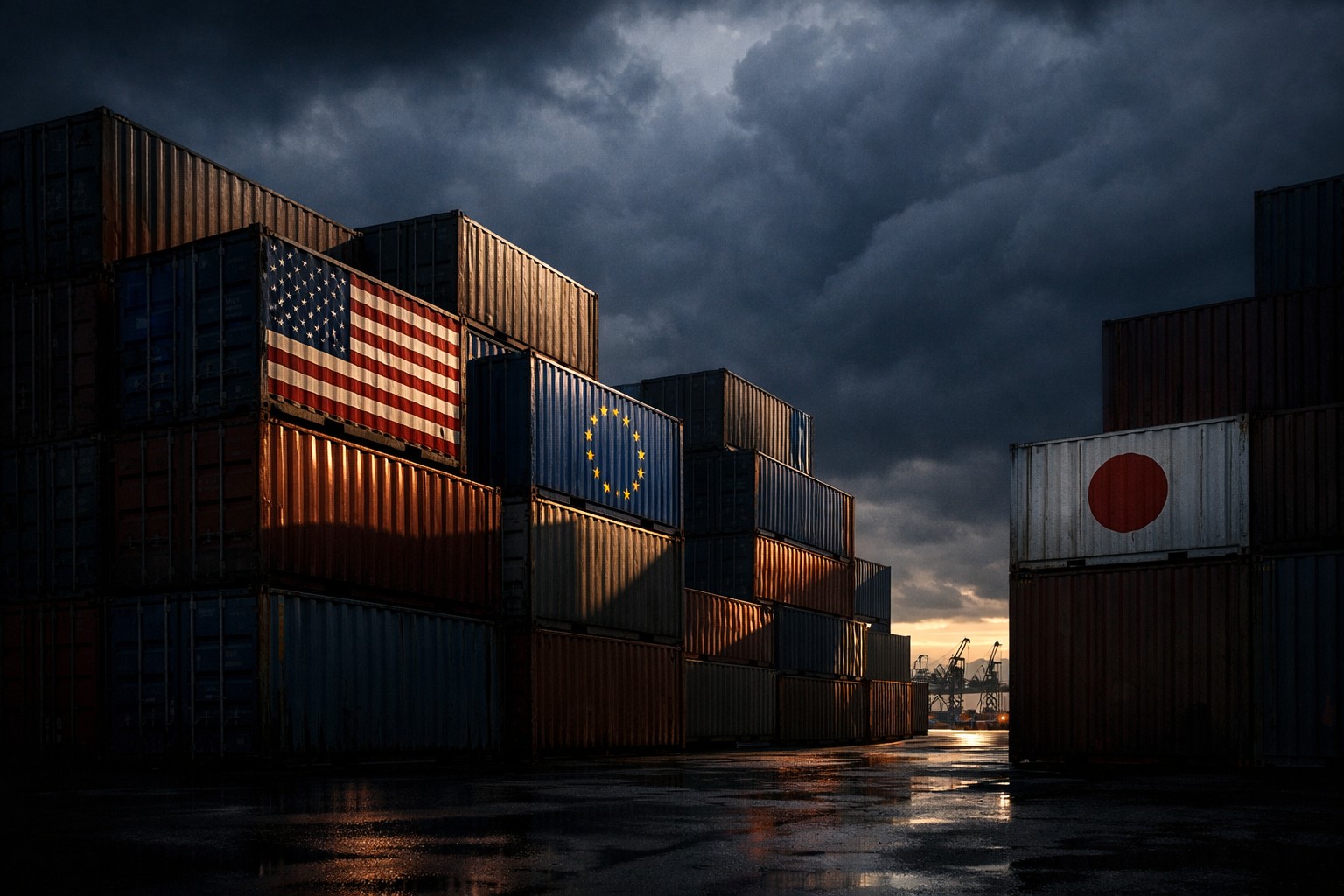
Trump Trade Chief Vows to Keep Tariff Caps in EU, Japan Deals
The United States will preserve existing tariff limits when finalizing or updating trade agreements with the European Union, Japan and several other partners, according to comments from the incoming Trump administration's top trade official.
Trade Chief Signals Continuity on Caps
Jamieson Greer, nominated to lead the Office of the United States Trade Representative, told reporters that tariff ceilings already embedded in current frameworks would remain untouched. The assurance comes weeks after President-elect Donald Trump again floated across-the-board duties on imported goods.
Greer emphasized that the administration seeks to avoid disrupting established commercial relationships while still pursuing leverage in other areas. He noted that sudden tariff hikes on close allies could trigger retaliation and raise costs for American manufacturers who rely on integrated supply chains.
Officials in Brussels and Tokyo welcomed the clarification. Both capitals have spent months preparing for possible new duties on automobiles, steel, and agricultural products.
Legacy of 2018 Tariff Actions
During his first term, Trump imposed 25 percent tariffs on steel and 10 percent on aluminum from most countries, citing national security. The European Union responded with targeted duties on American motorcycles, bourbon and blue jeans. Japan negotiated a limited bilateral deal that left many tariff lines unchanged.
Those episodes left lasting scars on transatlantic and transpacific commerce. Bilateral U.S.-EU goods trade reached $975 billion in 2023, while U.S.-Japan trade topped $220 billion. Industry groups on both sides have warned that fresh disruptions would raise input costs and slow investment.
Greer said the administration recognizes these volumes and intends to build on, rather than unravel, existing quota arrangements and tariff-rate quotas already negotiated.
Allies React to Reassurance
European Commission Executive Vice President Valdis Dombrovskis said the statement reduces immediate uncertainty for exporters. Japanese Economy Minister Ken Saito echoed that Tokyo views the commitment as a foundation for deeper talks on digital trade and supply-chain resilience.
Our priority remains stable, rules-based trade that benefits workers and companies on both sides of the Atlantic.
Business lobbies in Washington also expressed relief. The National Association of Manufacturers noted that many member firms source specialized components from Europe and Japan under long-term contracts priced with current tariff levels in mind.
Broader Tariff Agenda Still in Play
Despite the pledge on existing caps, the incoming administration continues to review additional duties aimed primarily at China. Proposed rates of 60 percent or higher on Chinese goods remain under discussion, according to transition advisers.
- Steel and aluminum tariffs from the first term may be expanded to more countries if negotiations stall.
- Automotive tariffs of up to 25 percent are still possible for vehicles not meeting new rules-of-origin requirements.
- Agricultural market-access disputes with both the EU and Japan are expected to resurface in early 2025.
Greer indicated that any new measures would be calibrated to avoid direct conflict with the tariff ceilings already in place for treaty partners.
Supply-Chain and Inflation Risks
Economists at the Peterson Institute for International Economics estimate that even modest new tariffs could add 0.2 to 0.4 percentage points to U.S. consumer price inflation in the first year. Retaliatory measures by trading partners would disproportionately affect U.S. agricultural exporters and aircraft makers.
Automakers with plants in the U.S., Mexico and Canada under the USMCA have already begun modeling scenarios in which tariff caps on European and Japanese components are respected while duties on Chinese electric-vehicle batteries rise sharply.
Next Steps in Trade Negotiations
Officials expect formal talks with the EU to resume in the second quarter of 2025, focusing on digital services taxes and critical minerals. Parallel discussions with Japan will likely emphasize semiconductor supply security and defense-related procurement.
Greer said the administration will publish a detailed negotiating mandate within 90 days of inauguration. Congressional committees have already scheduled briefings for late January.
Disclaimer: This content is aggregated from verified external sources for global news and information purposes only.